You Can Fall in Love
with a City

Quick Take
I stood on 62 acres of empty riverfront in the South Loop earlier this month and watched a city believe in itself. The occasion was the groundbreaking for the Chicago Fire FC’s new $750 million privately funded soccer stadium at The 78. There were hard hats and shovels and politicians and cameras. But what struck me wasn’t the ceremony. It was the conviction.
Every person who stepped to that podium spoke about Chicago the way I feel about it: not as a market to exploit, but as a place worth building for. I’ve spent my career in real estate development. I live here. I raise my family here. I build here. And I’ll tell you something that doesn’t show up in a proforma: you can fall in love with a city. When you do, it changes how you invest, what you build, and why you show up every day.
Silent, deep, and all in on Chicago.
Joe Mansueto didn’t just write a check. He wrote a love letter to Chicago in steel and glass. His $750 million investment is entirely private. No public subsidies, no taxpayer burden. Just a man who was born in East Chicago, Indiana, grew up in Hammond and Homewood, went to UChicago, and never stopped believing in this place.
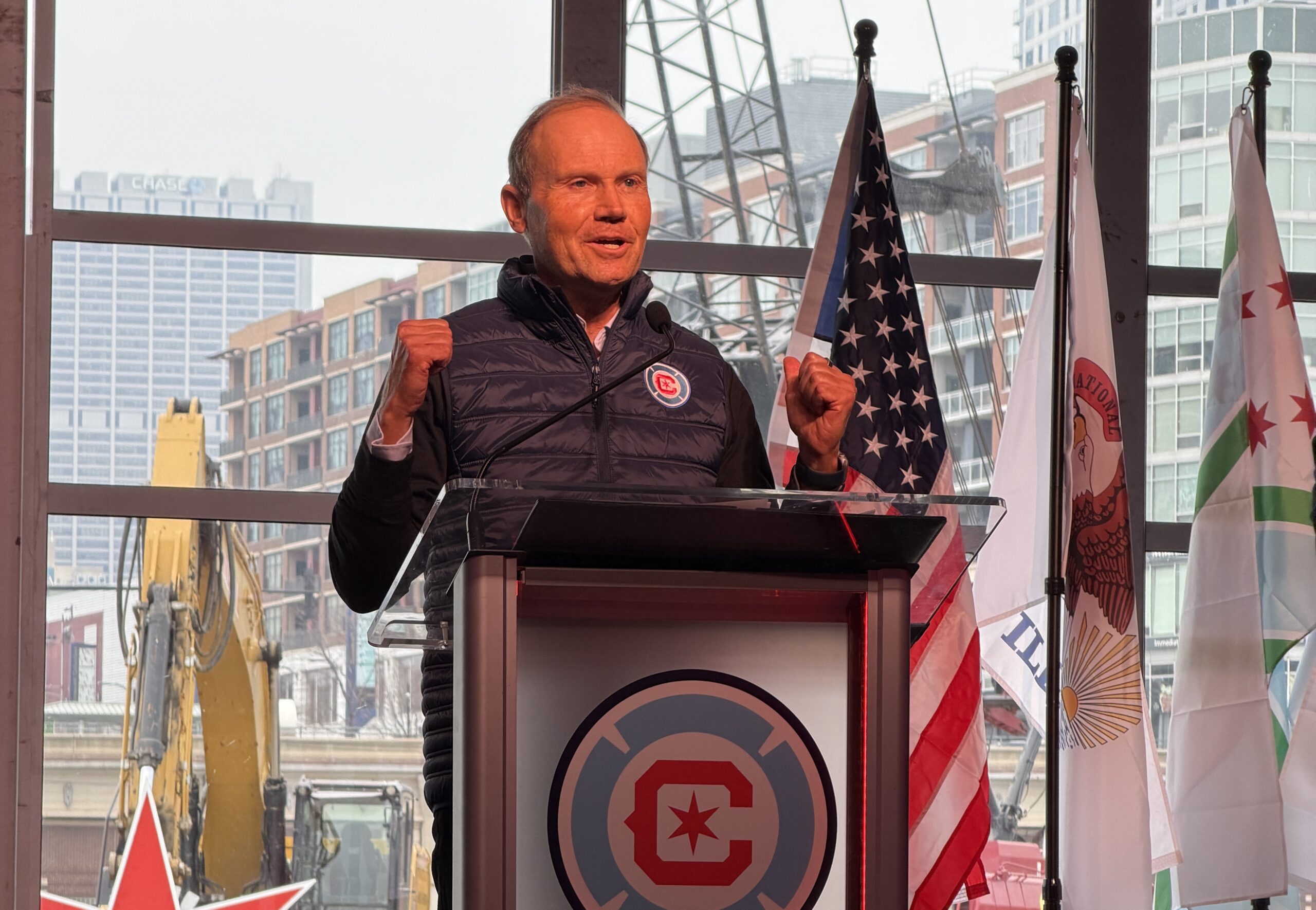
MLS Commissioner Don Garber called Mansueto something rare: “Very few owners are silent and deep who just believe in doing and don’t necessarily care about talking about it, that have a passion and a vision, not just for what they could achieve with their team, but what that team could achieve in the community.” Silent and deep. That’s the kind of investor Chicago deserves. And increasingly, it’s the kind of investor Chicago is attracting.
Numbers that back the conviction.
The Fire stadium anchors The 78, Related Midwest’s megadevelopment that will transform 62 acres of undeveloped riverfront into Chicago’s 78th neighborhood. The site sits at the confluence of three CTA lines, the Chicago River, and some of the most undervalued land in any major American downtown. When fully built out, The 78 will include residential, office, retail, and research space on a scale that rivals Hudson Yards.
The Chicagoland data center market is booming, with billions in new investment as the region positions itself as a Tier 1 hub for AI infrastructure. Google has expanded its Chicago Loop headquarters. Chicago’s fundamentals are strong: world-class transit, deep labor pools in tech and finance, and a cost of living that still offers real value relative to the coasts.
The right model: a stadium that builds a neighborhood.
Mansueto said something at the groundbreaking that was notable: “The right model today to develop a neighborhood is have a stadium as an anchor.” The evidence is piling up. Columbus’s Lower.com Field, GEODIS Park in Nashville, Austin FC’s Q2 Stadium. The pattern is consistent: a soccer-specific stadium, properly integrated into an urban fabric, becomes a 365-day-a-year anchor that drives foot traffic, retail demand, and residential interest far beyond match nights.
With the 2026 FIFA World Cup set to bring global attention to American soccer and MLS projecting 15–20% growth in domestic interest, the timing for Chicago couldn’t be better.
The city will show up for you.
The moment that stayed with me came from Fire President Dave Baldwin. He told a story about a man in an elevator who recognized him and said, simply: “Tell Joe, when you show up for Chicago, Chicago shows up for you.” Mayor Johnson echoed the same phrase. It became the refrain of the day. And it captures something I’ve experienced firsthand as a developer in this city. Chicago rewards commitment.
Alderman Dowell put it simply: “This stadium is gritty and soulful. It reflects back to what we know as Chicago. A city of broad shoulders.”
I’ve been in rooms with investors who look at Chicago and see headlines. I understand the hesitation. But I’ve also watched this city absorb punches and come back stronger, every single time.
If you’re an investor, a developer, or a business leader wondering where to place your next bet, come stand on the South Side of the river and look north at that skyline. Then turn around and look at the empty acres behind you, and imagine what’s coming.
Chicago doesn’t need people who believe in it when it’s easy. It needs people who believe in it, period. Show up, and this city will show up for you.